

Neutrinos AI-Powered Travel Claims Automation
Help travel insurers process claims faster with less manual work. Automate intake, document checks and routine assessments across existing systems, while claims specialists control exceptions, complex cases and approvals.

Travel claims management, fully orchestrated
Built on the Neutrinos platform, this solution connects claim intake, document processing, policy rules, specialist review and payment handoffs. It helps travel insurers coordinate work across existing policy and claims systems, reduce incomplete submissions and move eligible claims toward payment authorization, with human review only where required.
Capacity, clarity and control for travel claims management

Greater claims-handling capacity
Reduce mailbox sorting, data entry and case preparation so specialists can focus on exceptions and complex assessments. Help teams manage disruption-driven surges with automated routing and follow-up.

A clearer policyholder experience
Policyholders know where their claim stands from the first message. Instant acknowledgments, secure document uploads and proactive updates replace repeated requests and status-chasing, so the travel insurance claim process feels guided rather than uncertain, right through to decision and payment.

More adaptable, accountable operations
Gain lasting control over travel claims management as requirements change. Configurable rules update without core-system releases, and every rule outcome, human decision and exception is recorded, giving claims leaders clear sight of service levels, bottlenecks and who decided what, at every stage.
Key capabilities
Intelligent intake and registration

Document intelligence

Automated missing-document follow-up

Configurable decisioning

Unified claims workbench
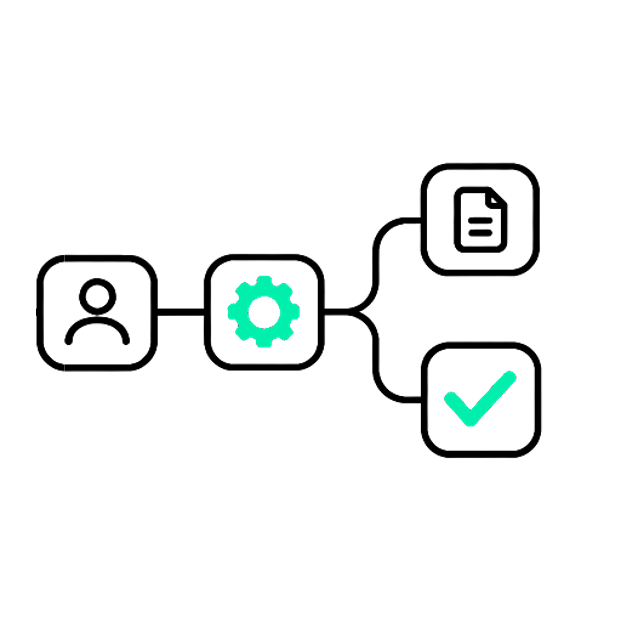
Claims workflow orchestration


Frequently Asked Questions
Travel claims automation is the use of AI, business rules and workflow orchestration to handle travel insurance claims with less manual work, from capturing submissions to coordinating payout. Neutrinos travel claims automation classifies each request, checks documents and eligibility, registers the claim, supports assessment and routes the decision. Insurers can configure workflows for trip cancellation claims, baggage loss claims and travel medical claims, in line with policy coverage and their own rules.
Neutrinos travel claims automation flags not-in-good-order (NIGO) submissions, those with missing, unclear or incomplete information, as soon as they arrive. It requests the exact documents needed through a secure, authenticated upload link and sends automatic reminders. The insurance claims management software then links each new document to the right case and revalidates it, so teams stop re-checking and reassigning by hand.
Travel insurance claims that pass every configured check can move through straight-through processing (STP), reaching payout readiness without manual intervention. Neutrinos travel claims automation checks policy coverage, incident dates, claimant details, document completeness and each insurer's approval rules. Low-confidence data, complex or high-value claims, and investigation or medical referrals remain with a human reviewer.
A travel claims workbench gives assessors one workspace for everything a decision needs. Neutrinos travel claims automation uses Unified Viewer to bring together case details, policy records, documents, extracted data, communications and audit history. As insurance claims management software with built-in claims case management software capabilities, it adds AI-generated summaries and recommendations, so assessors can review evidence, request documents, decide or route cases to specialists.
Yes. Neutrinos travel claims automation integrates with existing policy administration and payment systems instead of replacing them. The insurance claims management software retrieves policy details, keeps claim identifiers and case updates in sync, and hands payout-ready claims to established payment processes. Insurers modernize the travel insurance claim process while their systems of record and financial controls stay in place.
